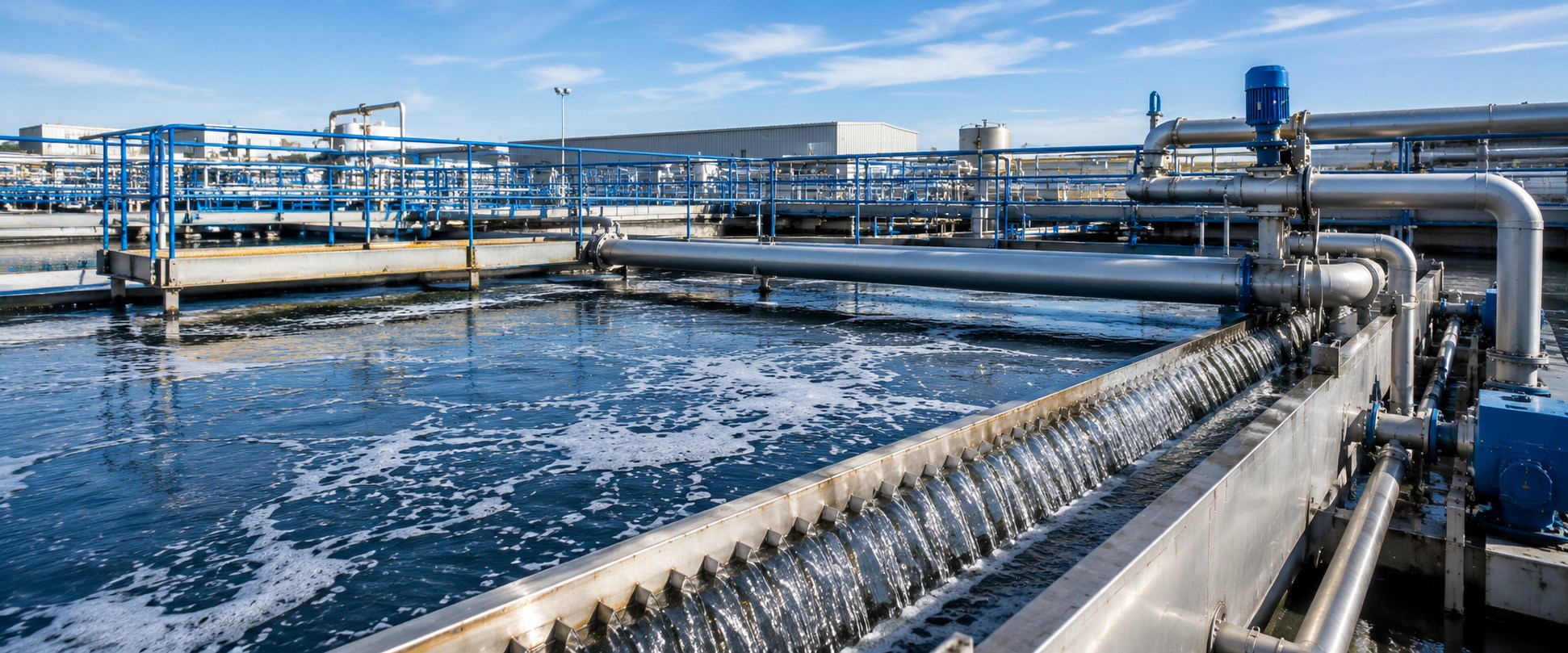
Dissolved air flotation for AfricaSuperior clarity.Sustainable solutions.
High-performance dissolved air flotation systems for industrial and municipal wastewater treatment — sized against your effluent, your temperature and your discharge consent. From a 2 m³/h packaged skid to a 1,200 m³/h high-rate cell, delivered CIF to any African port.
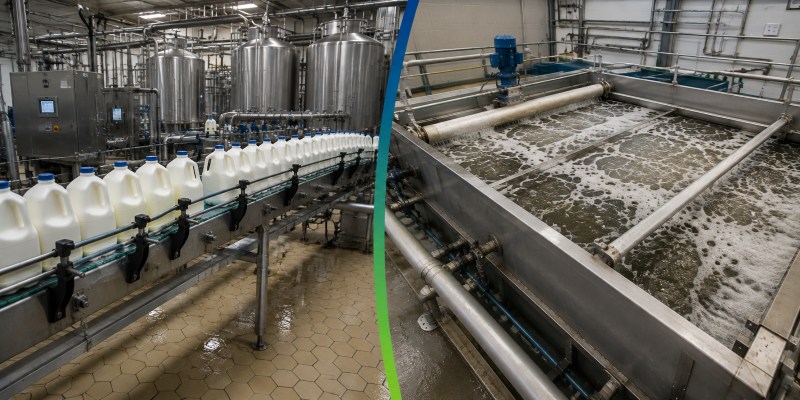
Dairy
Industry
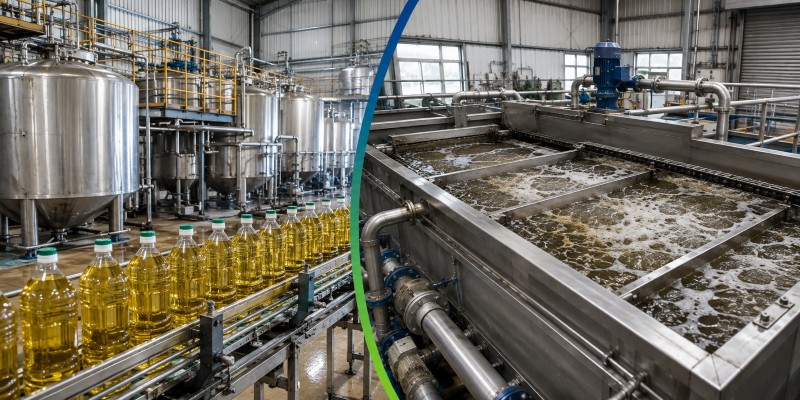
Edible Oil
Production
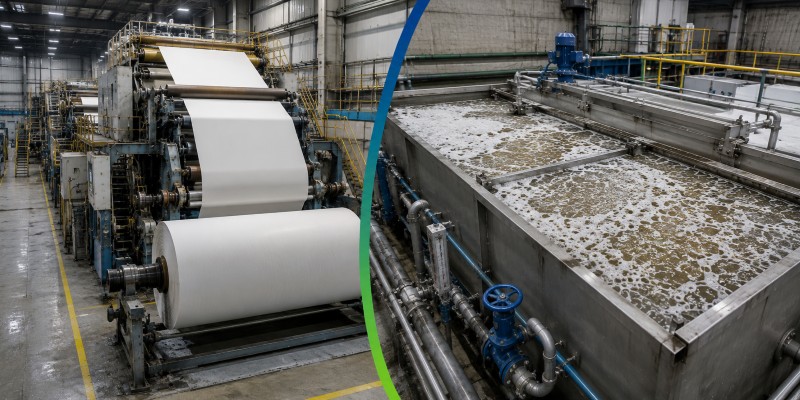
Pulp &
Paper
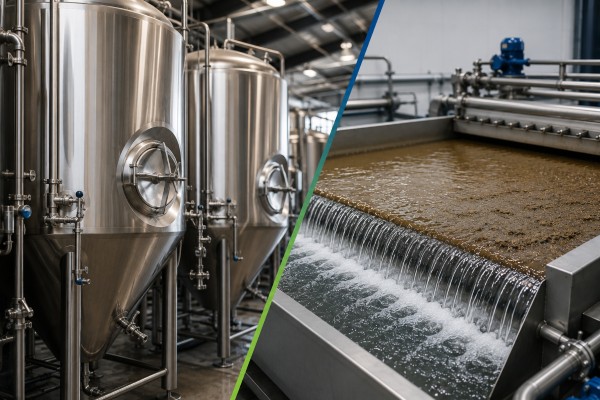
Brewery &
Beverage
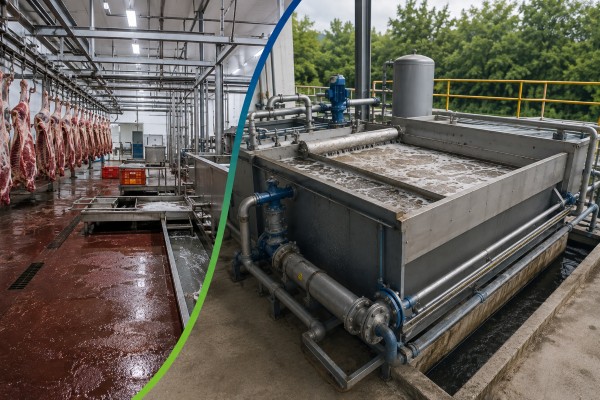
Abattoir &
Meat
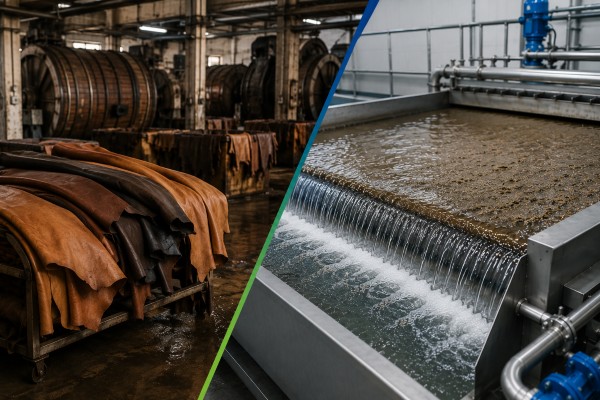
Tannery &
Leather
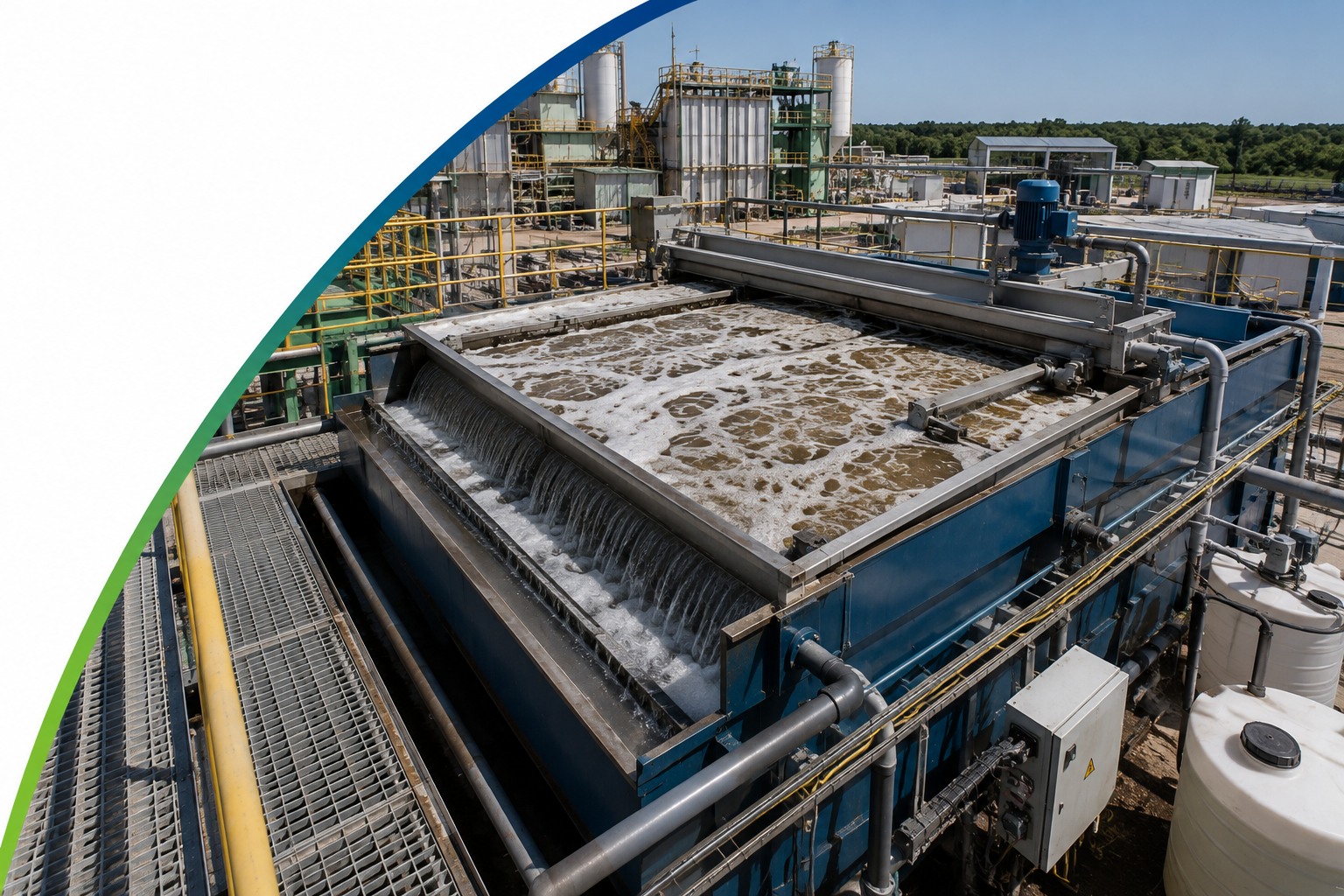
All Other
Industries
Municipal wastewater, poultry, fish and seafood, textiles, mining, produced water, plastics recycling, drinking water and more — with influent ranges and achievable removal for each.
Packaged DAF systems
One skid. Saturator, flocculation and flotation.
A packaged unit arrives pre-piped and pre-wired: air saturation vessel, recycle pump, flocculation stage, flotation cell, surface skimmer and sludge hopper on a single frame. It needs a level slab, power and pipework — no significant civil works.
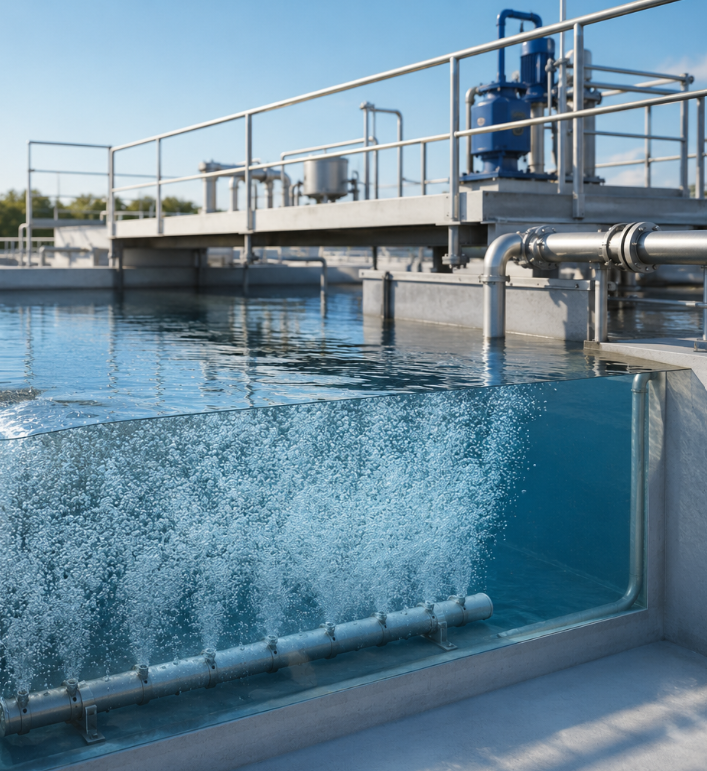
What is dissolved air flotation?
Dissolved air flotation (DAF) is a physical separation process that removes suspended solids, fats, oils and grease from water by attaching microscopic air bubbles to them so they float instead of sink. Part of the treated water is saturated with air at 4–6 bar in a pressure vessel, then released back into the flotation tank through a nozzle. The pressure drop precipitates 20–50 µm bubbles that adhere to coagulated floc, lifting it to the surface where a mechanical skimmer removes it as float sludge.
A correctly dosed DAF removes 85–98 % of suspended solids and 90–99 % of free and emulsified oil, at surface loading rates of 5–30 m/h — roughly ten to twenty times the throughput of a gravity clarifier of the same plan area.
watertreatment.africa publishes the design data openly — loading rates, the air-to-solids equation, air solubility corrected for temperature, per-industry influent characteristics — so you can specify a flotation plant properly whether or not you buy it from us. We also supply the systems, and the coagulants, polymers and reagents that keep them running. Part of AI-Spares, Hong Kong. How we work →
The engineering library
Why flotation suits African plants
- It survives load-shedding. A physical process is back in specification minutes after an outage. An activated sludge plant that loses aeration for a day can take weeks to rebuild its biomass.
- It matches the industrial base. Food and beverage, abattoirs, tanning and edible oil dominate African industrial effluent — all high-FOG streams, all classic flotation duties.
- It arrives prefabricated. A level slab, power and pipework. No significant civil works.
- It fits constrained sites. A DAF does the work of a clarifier ten to twenty times its plan area.
The honest counterweight: DAF needs continuous coagulant and polymer supply, an operator who can run a jar test, and more energy than gravity settling. We would rather tell you that before you buy than after.
Treatment chemicals, supplied to any plant
A flotation cell is a separator; the chemistry decides what there is to separate. We supply coagulants, flocculant polymers, pH reagents, oxidants and antifoams CIF to any African port — to any plant, not only to units we have sold. Every product page carries the specification, the active strength, dose ranges by industry and the customs classification.
Frequently asked questions
How much does a DAF system cost?
Ex-works equipment cost is driven by flow, materials of construction and the extent of the dosing and control scope. As an indicative planning band, a packaged carbon-steel unit with epoxy lining lands around USD 25,000–60,000 at 5–20 m³/h, USD 60,000–140,000 at 20–60 m³/h, and USD 140,000–350,000 at 60–150 m³/h. Stainless SS304 typically adds 30–50 %, SS316L 60–90 %, duplex more again. Freight, duties and installation are separate. We do not quote a figure before we understand the stream, because a number produced without knowing your TSS, FOG, temperature and discharge target is a number that will change.
How do I size a DAF unit?
Three calculations govern it. First, flotation area = design flow ÷ surface loading rate (5–15 m/h conventional, 15–30 m/h high-rate). Second, air demand from the air-to-solids ratio, normally 0.005–0.06 kg air per kg solids depending on the stream. Third, recycle flow, derived from air demand, saturator pressure and the solubility of air at your design temperature — the step most often done wrong, because solubility falls about 20 % between 20 °C and 32 °C. Our sizing calculator applies the temperature correction automatically.
What removal efficiency can a DAF actually achieve?
With correct coagulation and flocculation: 85–98 % of suspended solids, 90–99 % of free and emulsified fats, oils and grease, 40–70 % of total COD where the COD is particulate, and 60–90 % of total phosphorus with an iron or aluminium coagulant. Where COD is largely soluble — a brewery is the classic case — expect 20–40 % only. Flotation cannot remove dissolved organics, and any supplier promising a soluble-COD consent from a DAF alone is misleading you.
Does DAF work at African ambient temperatures?
Yes, but it must be designed for them. Air solubility in water falls with temperature: about 24.3 mg/L at 20 °C and roughly 19.5 mg/L at 32 °C at atmospheric pressure. A unit sized on 20 °C data and run at 32 °C delivers roughly 20 % less air than intended, and the float turns thin and grey. The correction is straightforward — a larger recycle ratio or a higher saturator pressure — provided it is applied at the design stage rather than discovered at commissioning.
What is the difference between DAF and a clarifier?
A clarifier settles solids denser than water using gravity, at 0.5–1.5 m/h. A DAF floats solids by attaching air bubbles, at 5–30 m/h. The practical consequences: a DAF occupies ten to twenty times less plan area for the same flow, produces a thicker sludge (3–6 % dry solids versus 0.5–2 %), handles fats and low-density solids that will never settle, and recovers within minutes of a power interruption. A clarifier uses far less energy and no chemicals in the simplest cases. Full comparison →
Do you deliver and install across Africa?
We deliver CIF to any African port and support commissioning on site. Installation itself is normally executed by a local contractor to our drawings, which keeps cost and mobilisation time down. We supply the general arrangement, P&ID, foundation loading, electrical schedule and commissioning procedure, and attend start-up.